The competitive global landscape in 2026 has made professional business valuation essential for founders, companies, investors, and stakeholders. Whether you are raising funds, onboarding new investors, issuing ESOPs, restructuring, or planning an M&A transaction, it is critical to ensure your business valuation is accurate, defensible, and compliant with relevant regulatory standards.
We assist businesses in understanding their true worth using internationally accepted valuation methodologies and updated 2026 frameworks. Our approach helps founders and management teams make informed decisions while entering into any transaction involving equity, investment, or restructuring.
1. Why Business Valuation Is Important
A proper valuation helps you understand where your business stands today and the potential future value it can create. As investor expectations and financial regulations evolve, businesses need valuation reports that align with the latest industry, regulatory, and compliance standards.
Valuation in 2026 is commonly required for the following situations:
- Fundraising from angel investors, micro-VCs, venture capital funds, family offices, or strategic investors.
- ESOP issuance and fair value reporting.
- Mergers, acquisitions, and business sale transactions.
- FEMA/RBI compliant valuation for foreign investment.
- Internal restructuring or share transfers.
- Litigation support, shareholder disputes, or corporate governance requirements.
- Financial planning and long-term strategic decision making.
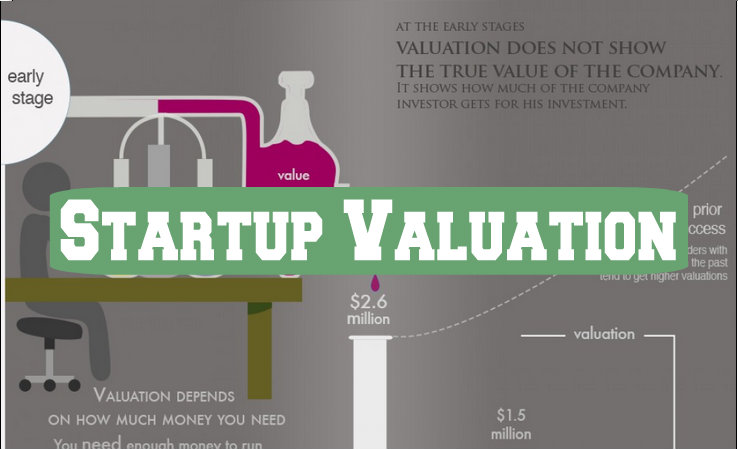
2. Startup Valuation
For early-stage startups, valuation directly influences equity dilution during fundraising. Promoters must carefully plan dilution because multiple future funding rounds may require additional equity.
Typical dilution during early rounds continues to fall between 15 percent to 25 percent, depending on the strength of the idea, traction, revenue visibility, technology, and investor appetite.
Example
If your business requires Rs 1 crore to operate for the next 18 to 24 months and you raise Rs 1 crore in exchange for 20 percent equity, the valuation is calculated as follows:
Post-money valuation: Rs 5 crore
Pre-money valuation: Rs 4 crore
This valuation should be supported by realistic revenue projections, founder capability assessment, comparable company data, and sector benchmarks.
3. Updated Valuation Methods Used
We use globally accepted valuation methodologies supported by updated 2026 regulations and financial standards:
- Discounted Cash Flow (DCF) Method
- Comparable Company Analysis (Market Multiple Method)
- Transaction Comparable Method
- Asset-Based Valuation
- Scorecard Method (commonly used for early-stage startups)
- Berkus Method (for idea-stage or pre-revenue startups)
- Pre-money and Post-money valuation frameworks
Each method is selected based on business stage, scalability, industry dynamics, regulatory requirements, and data availability.
4. Our Valuation Approach
Our valuation approach is built on data-backed financial analysis, compliance, and sector expertise. Key elements include:
- Reviewing financial statements, forecasts, assumptions, and cash flow expectations.
- Benchmarking the company with peer startups and comparable transactions in 2026.
- Applying valuation methodologies suitable for the maturity and risk profile of the business.
- Ensuring compliance with updated ICAI Valuation Standards (2026 edition).
- Ensuring regulatory alignment with SEBI, FEMA, RBI, Income Tax, and Companies Act requirements, wherever applicable.
- Preparing a defensible, investor-ready valuation report with detailed assumptions and justifications.
- Providing strategic inputs on dilution planning, funding readiness, and investor expectations.
We combine analytical rigor with practical commercial insights so founders and management get a valuation that is realistic, objective, and useful for negotiations.
5. When You Need a Business Valuation
A valuation is required in the following situations:
- Raising funds from angels, micro-VCs, VCs, or institutional investors.
- ESOP treatment and 409A-equivalent valuation for startups.
- Issue or transfer of shares for regulatory compliance.
- Business restructuring, mergers, or acquisitions.
- Due diligence or investor readiness assessment.
- FEMA-compliant valuation for foreign share allotment.
- Exit planning or business sale.
- Litigation or dispute resolution involving shareholding.
6. Why Choose Us for Valuation
- Sector specialists across technology, manufacturing, D2C, services, pharma, education, and financial services.
- Experience with valuations for startups, MSMEs, mid-size companies, and high-growth enterprises.
- Accurate, defensible valuation reports aligned with domestic and international standards.
- Deep understanding of investment trends in 2026.
- End-to-end assistance for forecasting, financial modeling, and investor preparation.
7. Get Compliant Business Valuation Services
To get a professionally prepared, defensible valuation report for fundraising, ESOPs, restructuring, or investor negotiations, connect with a Chartered Accountant.